

Listen up.
Toilet paper looks simple.
It is a long process that starts in a mill and ends as a small roll. And when shelves empty, it is usually not because the trees ran out.
Pulp
Logs are chipped. The chips are cooked or ground with water and chemicals until the wood breaks into fibers. That mix is pulp.
Recycled paper is soaked and cleaned instead. Ink and glue come out. The fibers are shorter, so the sheet is a bit weaker, but it works.
The pulp is washed and screened. You want fibers, not bark or sand.
The sheet
Clean pulp is sprayed onto a moving screen. Water drains. A wide, wet sheet forms.
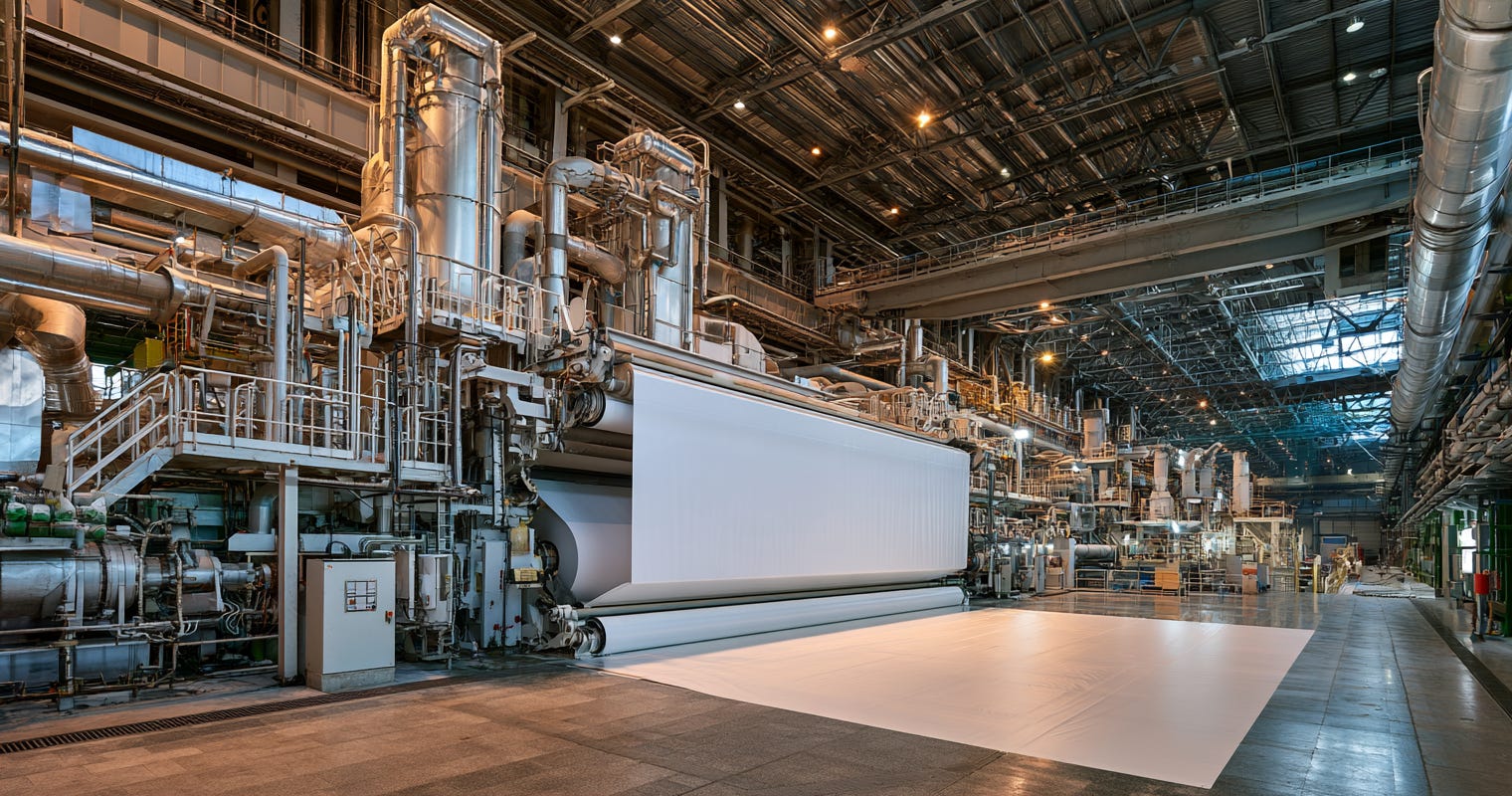
Rollers press more water out. Then the sheet is dried on big heated cylinders. Tissue is dried hot and fast so it stays soft instead of turning into stiff writing paper.
What comes off the machine is a giant parent roll.
The roll you buy
The parent roll goes to a converting line.
It is unwound, embossed, perforated, and wound onto cardboard cores. Then it is cut into short rolls, wrapped, and boxed.
The mill makes the paper. The converting plant makes the product on the shelf.
Why it ran out in places like Australia
In early 2020, Australia (and a lot of other countries) saw empty toilet-paper aisles.
The mills did not shut. The forests did not vanish. What ran short was finished consumer rolls in the shops.
Three things stacked up.
People bought more than usual, all at once. A normal week of sales became several weeks in a few days.
Toilet paper is bulky. You cannot sneak a lot of it through the existing trucks and warehouses. The system is sized for steady demand, not a sudden spike.
A lot of tissue capacity is split. Some lines make the soft retail rolls. Other lines make the big commercial rolls for offices, hotels, and factories. When offices closed and homes bought more, you could not simply flip a commercial machine to retail overnight. Different widths, different cores, different packaging.
So the pulp was there. The parent rolls were there. The bottleneck was converting, packing, and trucking enough of the right small rolls to the right shops before the panic buying cleared the shelves again.
Once buying went back to normal, the aisles filled. Nothing fundamental had been missing.
The simple picture
Chips or waste paper → pulp → sheet → dry → giant roll → cut into small rolls.
A shortage of the small rolls is usually a surge and a slow supply chain, not an empty mill.
— Engineering Uncle
AEO FAQ
Q: How is toilet paper made?
A: Wood chips or recycled paper are turned into pulp, formed into a sheet, pressed, dried into giant rolls, then cut and wound into the small rolls you buy.
Q: Why did Australia run out of toilet paper in 2020?
A: Panic buying cleared the shops faster than converting lines and trucks could refill them. The mills kept running. The finished retail rolls could not reach the shelves fast enough.
Q: Was there a shortage of wood or pulp?
A: No. The constraint was turning parent rolls into packaged consumer rolls and moving those bulky packs to stores during a sudden spike in demand.
Q: Why can’t factories just make more overnight?
A: Paper machines and converting lines run near steady capacity. Retail and commercial lines are set up differently. You cannot switch them, or add trucks, in a few days.
Q: What is a parent roll?
A: The huge roll that comes off the paper machine. It is later converted into many small toilet-paper rolls.
Read more


Suggested reading
Mill videos that show the paper machine and parent rolls.
2020 explainers on toilet-paper panic buying and just-in-time retail (Australia or US).
Plain notes on why tissue converting lines are split between retail and commercial.