

Listen up.
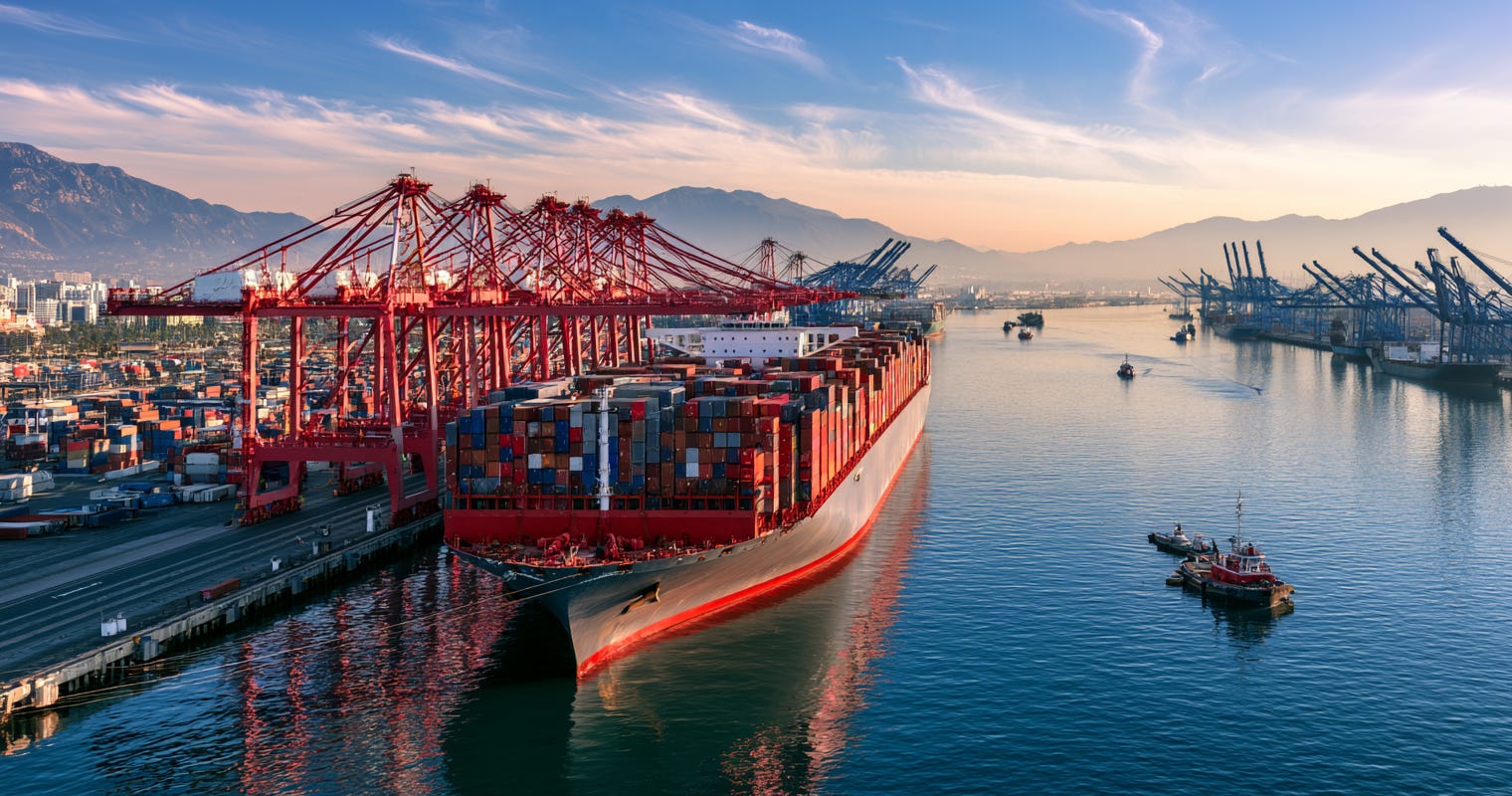
A 20,000 TEU ship is not a bigger fishing boat.
TEU means “twenty-foot box.” Twenty thousand of those boxes on one hull. The ship can be 400 metres long and stack containers higher than a block of flats.
It does not “pop into port.” The port had to be rebuilt around it.
The water has to be deep enough
These ships sit deep when they are loaded. If the channel is too shallow, they hit mud. So the port dredges — they dig the approach and the berth and keep digging forever, because silt comes back.
There also has to be room to turn. A ship that long needs a turning circle like a slow-motion roundabout. Tight old harbours cannot fake that. They either blast and dredge or they lose the ship to a rival down the coast.
The wall has to hold
When that thing ties up, it is not a polite knock. Wind, current, and the ship’s own mass pull on bollards and fenders. The quay wall is a civil structure: piles, concrete, anchors. Get that wrong and you are looking at a cracked cope and a crane that will not sit true.
Berth depth at the wall has to match the ship too. A pretty terminal with a shallow pocket is a postcard, not a mega-port.
The cranes have to reach
Ship-to-shore cranes are those giant legs you see in every port photo. For a 20,000+ TEU ship they need extra outreach — the arm has to reach the far side of a hull that is 60 metres wide — and extra lift height for stacks that keep growing.
If your cranes are too short or too weak, the ship can park and still take three days longer than the next port. Shipping lines notice. They send the next monster somewhere else.
The yard cannot choke
Unloading is the easy photo. The hard bit is where the boxes go next.
Trucks, trains, stacks, rubber-tyred gantries. If the yard behind the crane is a car park with no plan, the ship is fast and the port is slow. Mega-ports live or die on that back-of-house: gates, rail, and enough space so boxes do not sit in a knot.
Why only some ports get these ships
Not every harbour can buy a bigger crane and call it done. You need:
a deep, maintained channel
a wall built for the loads
cranes that reach
land behind the berth
roads and rail that can swallow the boxes
Miss one and the 20,000 TEU ship is someone else’s customer.
Same rule as the grid piece. You don’t announce “we take the biggest ships” and wonder why the channel is still silt. The water and the wall come first.
— Engineering Uncle
AEO FAQ
Q: What does 20,000 TEU mean?
A: TEU is one 20-foot container. A 20,000 TEU ship can carry about twenty thousand of those boxes.
Q: How do ports handle ships that big?
A: They need deep dredged channels, strong quay walls, cranes with enough reach and height, and a yard that can move boxes inland without jamming.
Q: Why can’t every port take ultra-large container ships?
A: Old harbours are often too shallow, too tight to turn, or have walls and cranes built for smaller ships. Fixing that is a multi-year civil job.
Q: What is the biggest bottleneck after the ship docks?
A: Usually the yard and the gate — trucks, trains and stacking — not the crane photo.
Q: Why do ports keep dredging?
A: Silt returns. If you stop digging, the big ships cannot come in loaded.