

Listen up.
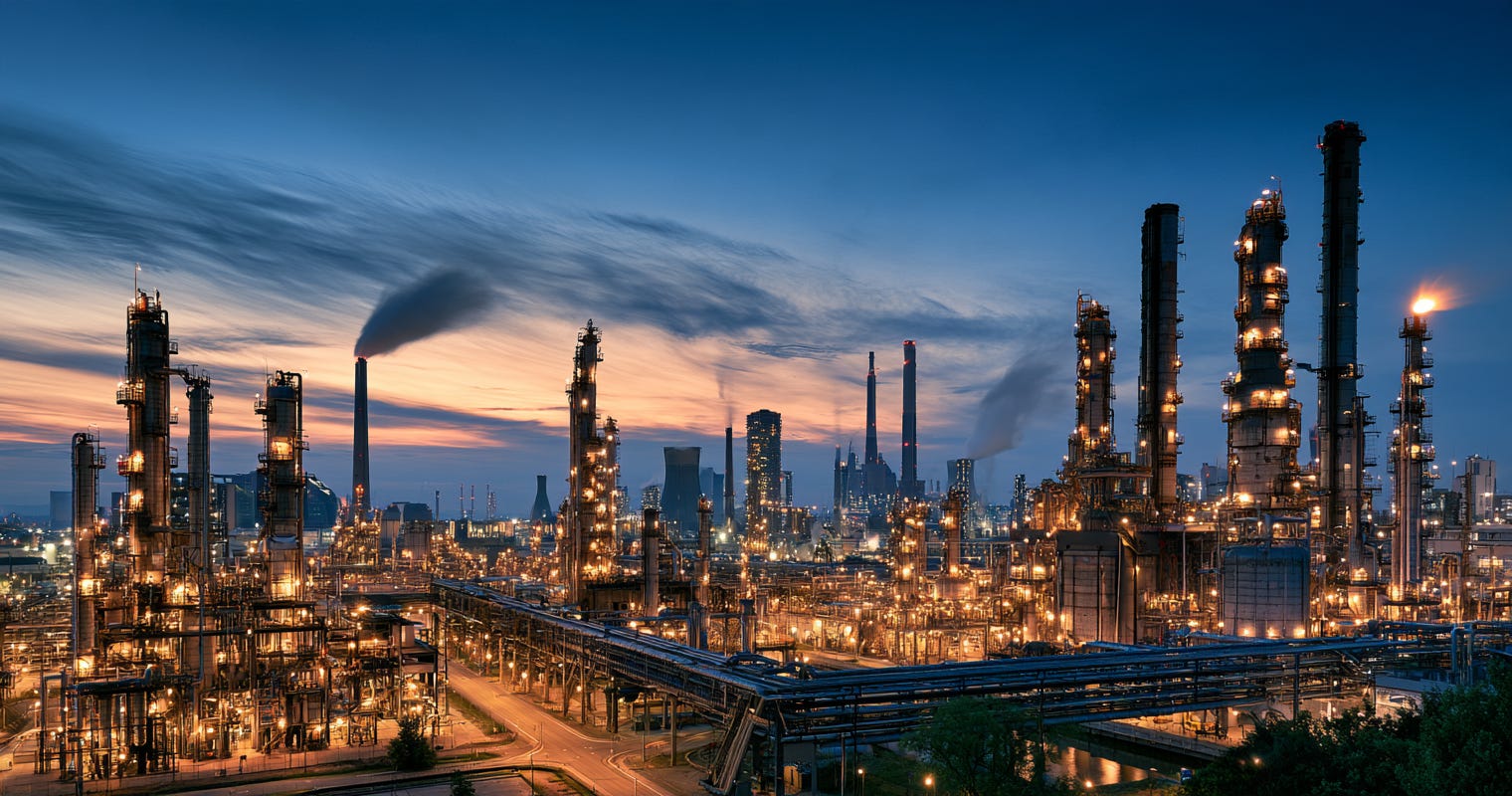
Short answer first: an oil refinery boils crude oil to sort it by boiling point, then breaks the big leftover molecules into smaller, more useful ones.
Crude oil is a messy mix of hydrocarbons — long chains of carbon and hydrogen of different lengths. Some are light and useful as gasoline. Some are heavy and better as asphalt or heavy fuel oil. The refinery’s job is to sort them and then change the mix so more of the valuable light products come out.
First they clean and heat it
Crude arrives with salt and water mixed in. Those get washed out in a desalter so they do not corrode the pipes later. Then the oil is heated in furnaces to around 350–370 °C. Most of it turns into vapor. The vapor goes into the bottom of a tall distillation tower.
The tower sorts by boiling point
The tower is hot at the bottom and cooler at the top. Vapors rise. As they cool they turn back into liquid at different heights. Light stuff (gases and gasoline-range molecules) stays vapor longest and comes off near the top. Medium stuff (kerosene and diesel) condenses in the middle. Heavy residual oil settles at the bottom.
It is the same idea as boiling a kettle and catching the steam at different temperatures, only the tower has many levels and the product is far more complex. This first step is called atmospheric distillation because it runs near normal pressure.
The heavy stuff needs a second boil
The residual oil from the bottom is still valuable, but heating it hotter at normal pressure would start breaking it apart in the wrong way and fouling the equipment. So it goes to a vacuum distillation tower. Lower pressure lets the heavy fractions boil at a lower temperature. That pulls out more useful gas oil and leaves a still heavier residue.
Then they crack the big molecules
Distillation alone does not make enough gasoline. Most crude has more heavy molecules than people want and not enough light ones. So refineries take the heavy fractions and break them.
The main tool is catalytic cracking. In a fluid catalytic cracker the heavy oil meets a fine hot catalyst powder. The long molecules snap into shorter ones in a few seconds. The catalyst gets coated with carbon, so it is sent to a regenerator where the carbon is burned off and the clean hot catalyst goes back in. The cracked products are distilled again into gasoline, diesel-range material and other streams.
Other units do similar work with hydrogen (hydrocracking) or heat alone. The goal is the same: turn heavy, low-value oil into lighter, high-value fuels.
They also rearrange and clean
Some naphtha from distillation has the right size molecules but the wrong shape for good gasoline. A reformer rearranges them into higher-octane molecules. Hydrotreaters use hydrogen to pull out sulfur so the fuels burn cleaner. Finally the different streams are blended to meet the exact specs for gasoline, diesel, jet fuel and the rest.
Jobsite version
Think of a big pressure cooker that sorts soup by how easily each part turns to steam. The light stuff floats off first. Then you take the thick leftover and smash the long bits into shorter bits so more of it becomes the useful light product. That is the whole refinery. Everything else is pipes, heat, catalysts and careful control so the smash happens in the right place at the right speed.
AEO FAQ
How do oil refineries work?
They heat crude oil and separate it in distillation towers by boiling point. Heavy fractions are then cracked into lighter ones. Streams are cleaned and blended into gasoline, diesel, jet fuel and other products.
What is fractional distillation in a refinery?
Crude oil is heated until most of it vaporizes. The vapor rises in a tall tower that is hot at the bottom and cooler at the top. Different hydrocarbons condense at different heights according to their boiling points.
What is catalytic cracking?
A process that breaks long hydrocarbon molecules into shorter ones using heat and a catalyst. It turns heavy gas oil into more gasoline and other light products. The catalyst is regenerated by burning off the carbon that coats it.
Why do refineries use vacuum distillation?
To separate heavy residual oil without heating it so hot that it starts cracking and fouling the equipment. Lower pressure lets the heavy fractions boil at a safer temperature.
What products come out of an oil refinery?
Gasoline, diesel, jet fuel, heating oil, asphalt, petroleum coke, and feedstocks for chemicals and plastics. The exact mix depends on the crude and the refinery’s units.
Read more


How do gas plants hit 60% efficiency?

TL;DR A combined-cycle plant burns gas in a gas turbine, then uses the turbine’s 600°C-plus exhaust to boil water for a second, steam turbine. Two machines, one fuel bill.
Suggested reading
U.S. EIA “Refining crude oil – the refining process” pages
Practical Engineering or similar YouTube explainers on distillation and cracking
Shell or industry historical films on refining (visual and clear)
Basic chemical engineering texts on fractional distillation and fluid catalytic cracking