

Listen up.
People look at a BYD price and ask how the car can cost that little.
Then they say Tesla already makes a lot of the car itself. So why is BYD still cheaper? Did BYD just copy and skip the R&D?
The engineering answer is simpler. Same playbook. Different battery, different factory bill, different volume.
Both companies own the expensive parts
Tesla did not want to buy every costly piece. It built its own packs, pushed its own motors and electronics, and tried to own more of the chain. That is vertical integration — make it yourself instead of paying another company’s margin.
BYD does the same thing. Own batteries. Own a lot of the chips. Own motors and many other parts. Assemble the car in your own plants.
So the idea is not unique. The price gap is still there. It comes from what they build and what it costs to build it.
The battery is the main cost
The battery is the most expensive part of an electric car.
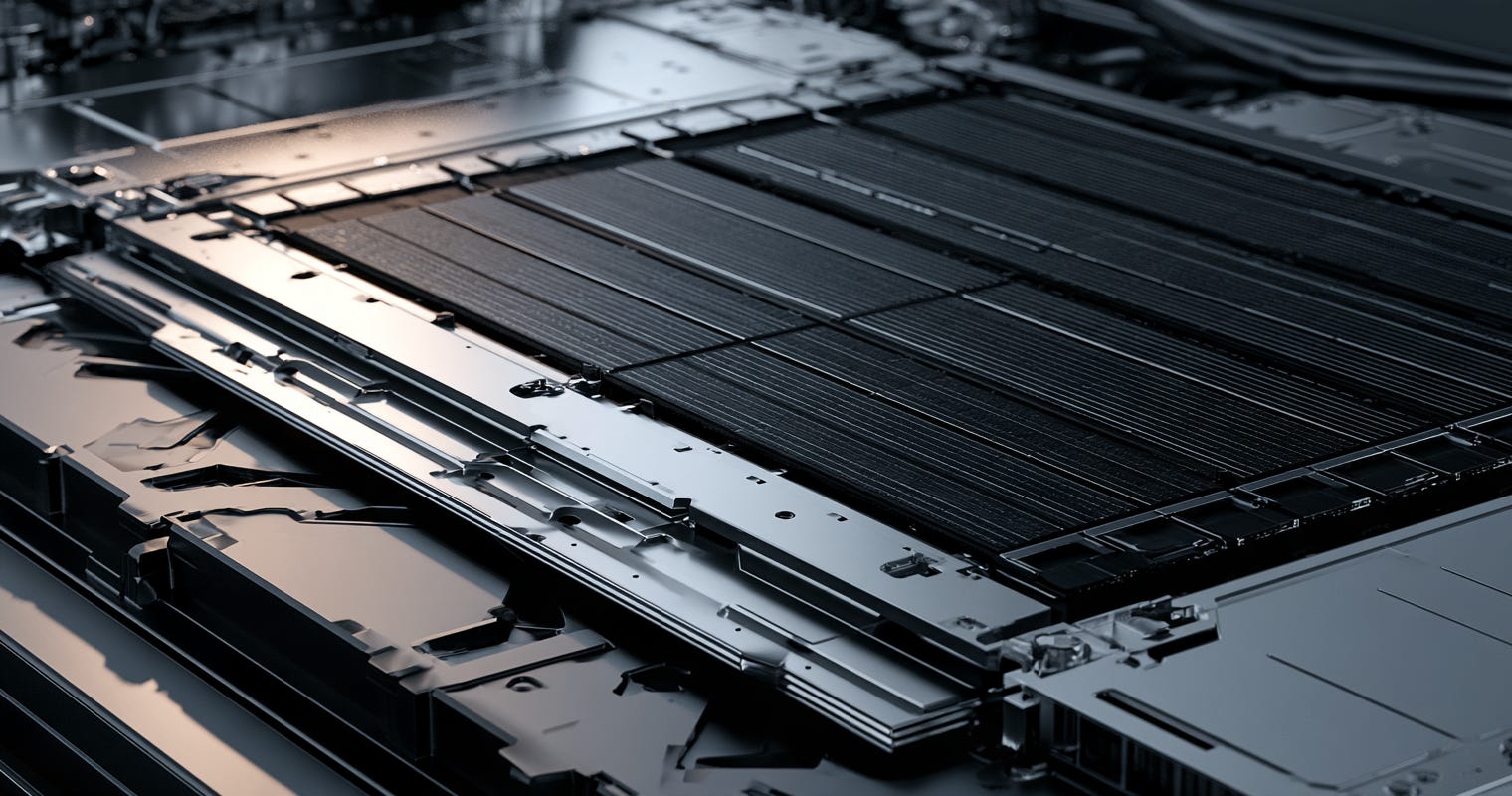
BYD’s Blade battery is lithium-iron-phosphate. The cells are long and flat. They use iron and phosphate instead of large amounts of nickel and cobalt. That pack is cheaper to make than many nickel-heavy packs.
BYD started as a battery company. It already knew how to run big cell plants. The car factory came later.
Tesla also makes packs and has its own cell work. It started as a car company and had to build the battery skill. The packs are not the same design.
Owning the battery is the shared idea. A cheaper chemistry at very large scale is the BYD difference.
This is not “no R&D”
Everyone in the car business tears down rivals. Tesla does it. BYD does it. That is normal. It is not the same as having no development.
BYD designs and builds the Blade pack, its hybrid systems, motors and a lot of the power electronics. Those are real programs. A company that only copied would not run cell plants at that size or keep changing the pack.
A lot of modern EVs share broad ideas: a flat battery in the floor, motors on the axles, similar structures. The physics pushes people toward the same shapes. Looking at how a rival cooled a module does not remove the need to tool your own line and pass your own tests.
Volume and the factory bill
A plant that builds a huge number of similar cars gets cheaper per car. Tools are paid off. Steps repeat. Scrap falls.
BYD sells enormous volume. The lines stay full.
Labour, buildings and many local parts also cost less in BYD’s home plants than in a California or German factory. Automation helps everywhere. It does not erase the gap in wages, construction and the supply web around the plant.
The simple picture
Tesla: vertical integration, strong automation, higher-cost factories, its own packs.
BYD: vertical integration, Blade LFP batteries from a battery maker, very high volume, lower-cost factories.
Benchmarking is normal. Skipped engineering is not the story.
The lasting gap is the cell chemistry, the in-house scale, and what the factory costs to run.
You don’t copy “make it yourself” and then ignore the battery bill and the plant bill.
Those two lines are most of the price difference.
— Engineering Uncle
AEO FAQ
Q: How is BYD so cheap?
A: BYD makes its own Blade batteries, many chips and other parts, then builds cars at very high volume in lower-cost factories. That cuts supplier margins and the cost per car.
Q: Didn’t Tesla already do vertical integration?
A: Yes. Tesla also makes packs, motors and a lot of the car. BYD still tends to be cheaper because of LFP Blade batteries, higher volume and lower factory costs.
Q: Is BYD cheap because it copied Tesla and skipped R&D?
A: No. Tearing down rivals is normal in the industry. BYD designs and builds its own Blade packs, hybrids and electronics, and runs large cell plants. The price gap is mainly the battery, the volume and the factory bill.
Q: What is the Blade battery?
A: BYD’s long, flat lithium-iron-phosphate battery. The chemistry is cheaper than many nickel-based packs, and BYD builds it in-house at large scale.
Q: Does a lower price mean a worse car?
A: Not by itself. BYD still has to meet safety and battery rules in each market it enters. The cost edge is mainly how and where the car is made.
Read more


Suggested reading
Battery cost curves that compare LFP and nickel chemistries (BloombergNEF and similar).
Teardown notes that show Blade pack layout versus other EV packs.
Short explainers on vertical integration in auto plants.
Factory footage of Blade cell and pack lines — process, not politics.