

Listen up.
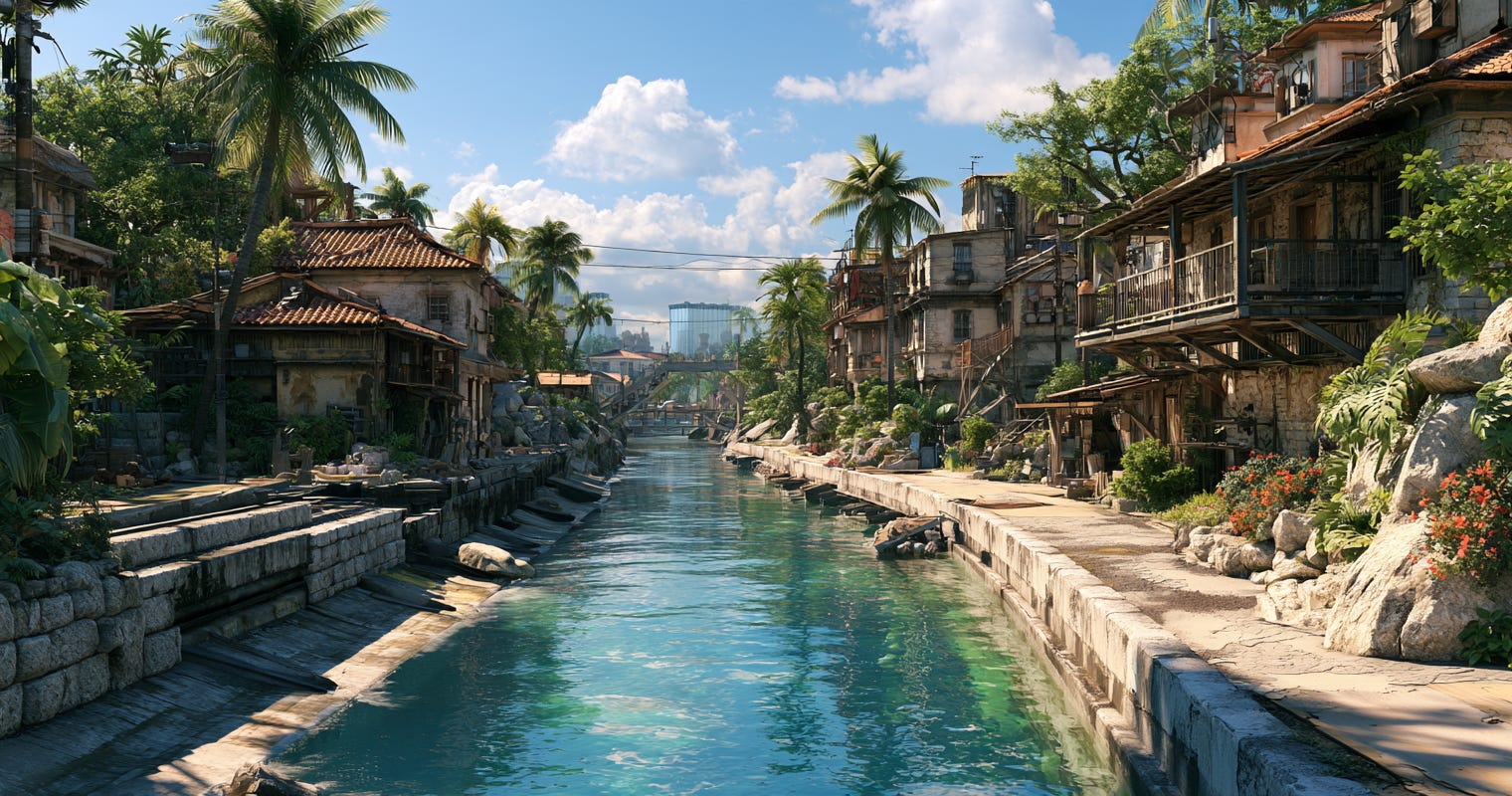
A tropical city does not get one problem at a time.
It gets heat, heavy rain, and flood risk together. The engineering has to handle all three.
Heat
Temperatures stay high. Humidity stays high.
Buildings need shade, ventilation, or air conditioning. Air conditioning loads the power grid right when everyone wants it. Roads and roofs store heat and push night temperatures up.
The fix is not one trick. Shade, lighter surfaces, and enough power for cooling all have to work at once.
Rain
Tropical rain is intense. A lot of water arrives in a short time.
Drains, canals, and pumps have to move that water before it fills the streets. If the system is sized for average rain, the big storms overflow it.
Many tropical cities sit on flat land or near the coast, so the water has nowhere to go quickly. Gravity is weak. Pumps do the work.
Flood
When the drains cannot keep up, streets flood.
Low areas, blocked canals, and high tides make it worse. Some cities build big underground tanks or diversion channels. Some raise roads and buildings. Some accept that certain streets will flood and design for fast drainage after.
Tokyo’s underground flood tanks are one answer. Smaller cities often rely on canals and pumps instead. Same problem, different budget.
Power
Cooling and pumps both need electricity.
A heat wave and a storm can hit the grid together — high demand, plus wet equipment and fallen lines. Substations in flood zones need to sit above the water or be sealed.
A tropical city that cannot keep the power on cannot keep the pumps running or the buildings cool.
The simple picture
Move the rain.
Keep the power on for pumps and cooling.
Design buildings and streets for heat and for water.
You don’t treat a tropical city like a dry one with more trees.
You design for heat and sudden water at the same time.
— Engineering Uncle
AEO FAQ
Q: What makes engineering a tropical city different?
A: Heat, intense rain, and flood risk arrive together. Drainage, cooling, and power all have to work at the same time.
Q: Why do tropical cities flood so easily?
A: Heavy rain falls fast, and many cities are flat or coastal. Drains and pumps sized for normal rain cannot clear a big storm before streets fill.
Q: How do tropical cities handle heat?
A: Shade, ventilation, lighter surfaces, and air conditioning. Cooling raises power demand, so the grid has to keep up.
Q: Why is power critical in a tropical city?
A: Pumps move floodwater and air conditioning handles heat. If the power fails in a storm, both systems stop.
Q: What infrastructure moves the rain?
A: Street drains, canals, retention ponds, underground tanks, and pumps. Flat cities rely more on pumps because gravity is not enough.
Read more
https://engineeringuncle.com/p/tokyofloods
Why don't we build big dams anymore?

TL;DR The West mostly stopped building big new dams on main rivers. The best sites are already dammed, and fish, water rights, safety rules and cost now decide more than the concrete does.
https://engineeringuncle.com/p/desalinationplants
Suggested reading
Tokyo G-Cans or similar flood-tunnel explainers.
Plain pieces on urban heat islands and why air conditioning loads the grid.
Short notes on pump versus gravity drainage in flat coastal cities.