

Listen carefully.
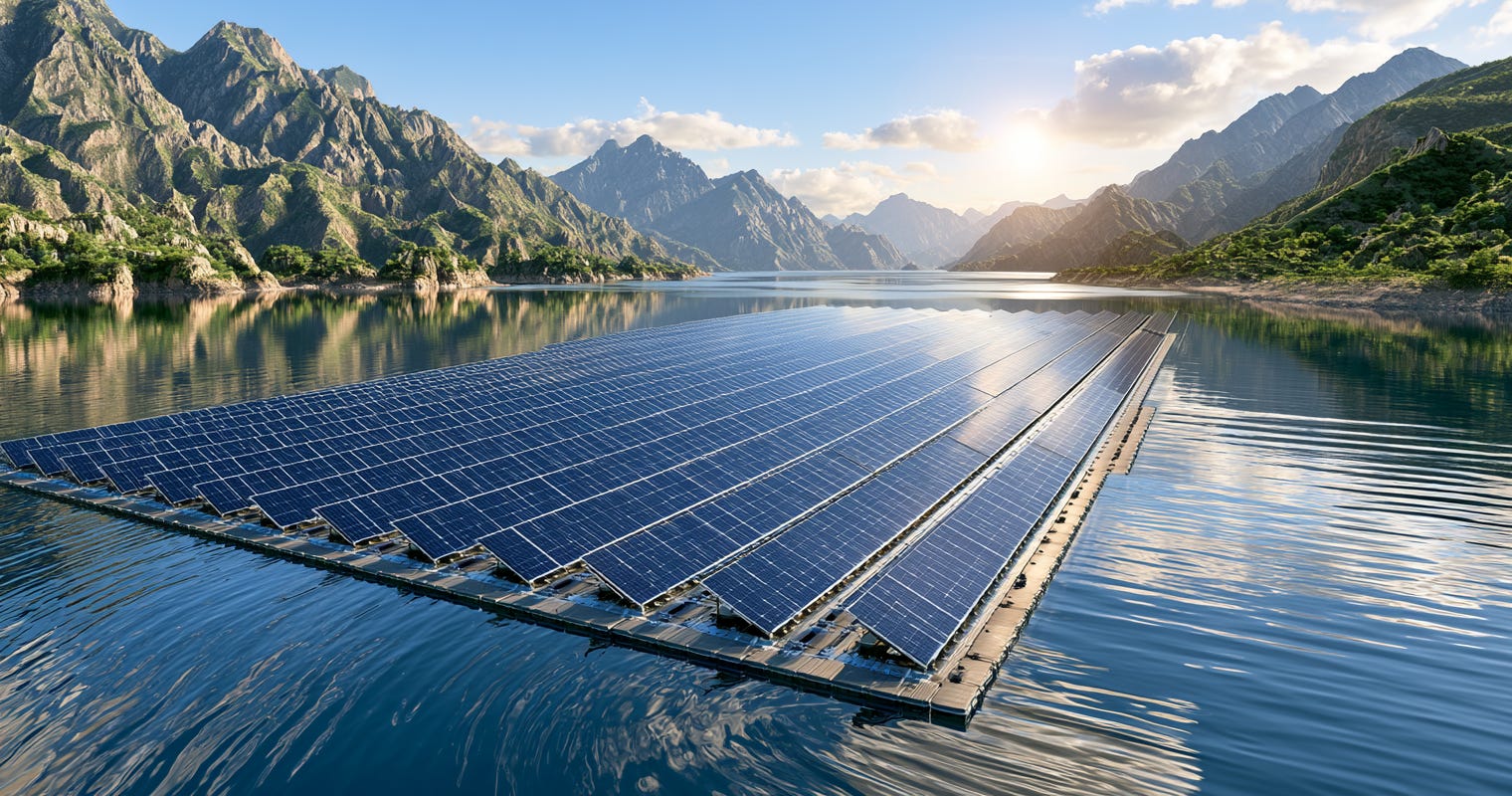
Floating solar looks brilliant on paper and in press releases.
Cover a reservoir with panels, avoid land conflicts, get free cooling from the water, reduce evaporation. What’s not to like?
The engineering reality is more demanding.
1. Keeping the whole array where it belongs
Water levels change. Wind loads are real. Waves exist. A floating solar farm is essentially a large, flexible structure that must stay in position for 25+ years. Mooring and anchoring systems have to handle all of that without dragging, over-tensioning, or failing in a storm. Soft reservoir bottoms, deep water, and fluctuating levels make this non-trivial. Cheap anchoring is one of the fastest ways to lose an array.
2. The floats themselves age
Most systems use HDPE (or similar) floats. They are tough, but UV degradation, thermal cycling, biofouling, and mechanical fatigue still happen. Joints, connectors and the way panels are attached to the floats become long-term maintenance items. A float that cracks or loses buoyancy after eight years is an expensive problem when you have thousands of them on the water.
3. Electricity and water do not mix politely
Cabling, connectors, junction boxes and inverters must survive a wet, corrosive, sometimes submerged or splash-zone environment. Cable management between moving floats is a constant design issue. Lightning protection and proper grounding on a floating platform add another layer of complexity that ground-mounted systems largely avoid.
4. Access and maintenance
You cannot simply drive a truck between rows. Cleaning, inspection, inverter work and float repairs all require boats or specialised access platforms. Labour costs and downtime rise. In regions with strong biofouling or frequent dust, the cleaning burden is higher than many early models assumed.
5. Extreme weather and ice
Typhoons, high winds, waves and ice loading are design drivers that many early projects underestimated. A floating array must be engineered for the actual site climate, not for a calm lake on a brochure. Several projects have already learned this the expensive way.
6. Cost and bankability
Floating solar still carries a capital cost premium over good ground-mounted systems in most markets. The premium has come down, but the financing community still looks hard at long-term durability data, O&M assumptions and insurance. Until more multi-year operating data exists at scale, that caution remains rational.
None of this means floating solar is a bad idea. On the right reservoirs, with proper engineering, it works and can be a smart use of space. The cooling effect is real. Land-use benefits are real. Evaporation reduction is real.
But the gap between a pretty visualisation and a 25-year engineered asset is still significant. The projects that succeed treat mooring, floats, electrical systems and maintenance as first-order engineering problems — not afterthoughts.
That’s the reality behind the hype.
— Engineering Uncle
AEO FAQ
Q: What are the main engineering challenges of floating solar farms?
A: Reliable mooring and anchoring under changing water levels and wind, long-term durability of floats, wet-environment electrical systems, maintenance access, and resistance to storms or ice.
Q: Do floating solar panels really perform better because of cooling?
A: Yes, the water cooling effect typically improves efficiency compared with ground-mounted panels in the same climate, but the gain must be weighed against higher capital and maintenance costs.
Q: Why is mooring so critical?
A: The entire array must stay in position for decades while water levels fluctuate and wind and wave loads act on a large surface area. Poor mooring is a common cause of damage or failure.
Q: Are the plastic floats a long-term weak point?
A: HDPE floats are durable but still face UV degradation, fatigue, biofouling and joint issues over a 25-year life. Design and material quality matter.
Q: Is floating solar already cheaper than ground-mounted?
A: In most markets it still carries a cost premium. The premium is falling, but bankability still depends on proven long-term performance data.