

Listen up.
People hear “geothermal” and think a spa with a turbine bolted on.
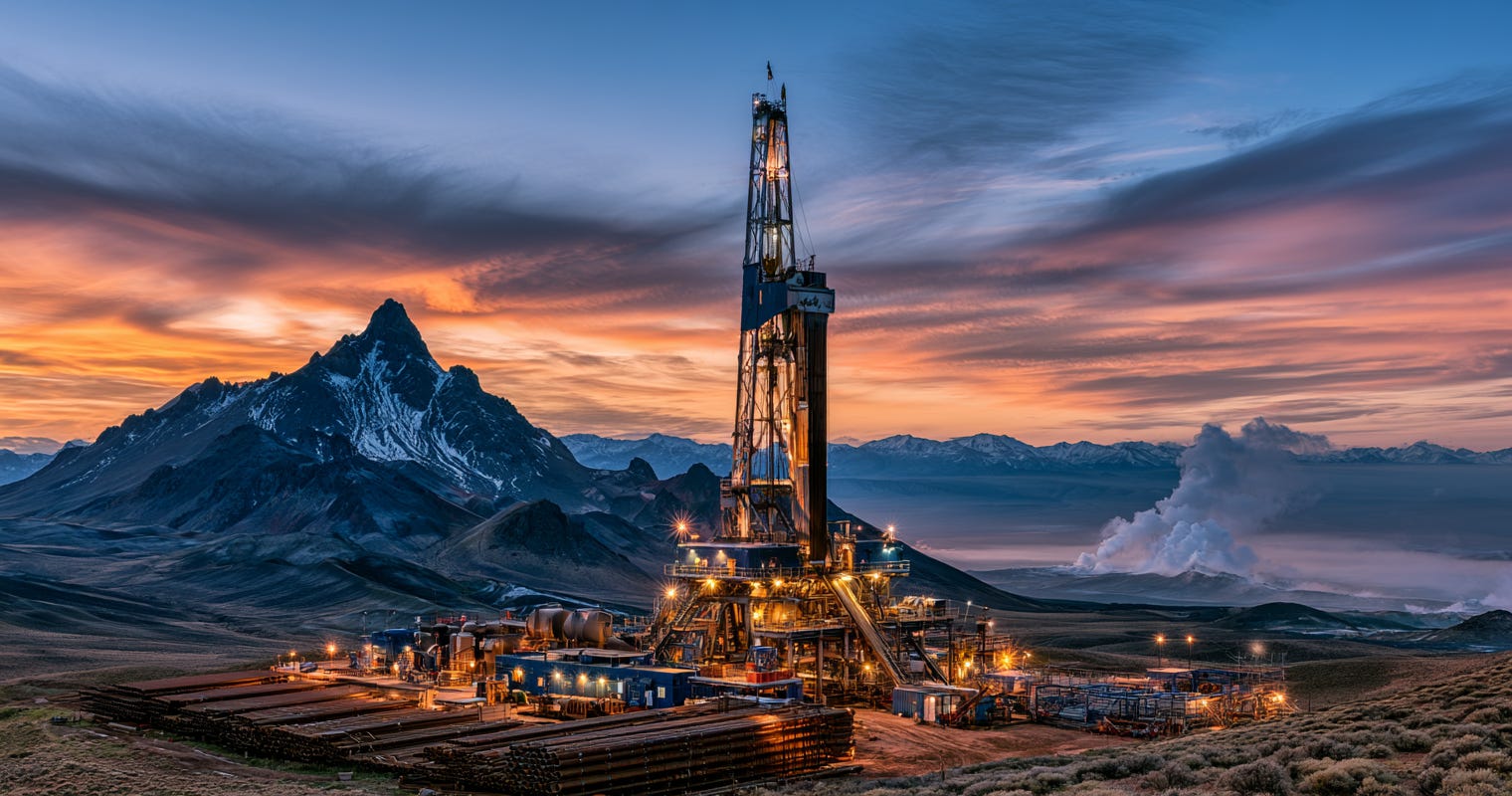
Enhanced geothermal is a drilling job that happens to make electricity.
You go find hot rock. You punch holes in it. You crack it enough that water will run from one well to the other, pick up heat, and come back to the surface. Then you make power. Day, night, Christmas, doesn’t matter. That’s the pitch.
The ground does not care about the pitch.
What you’re actually doing out there
Two dirty jobs stacked together.
First job: drill in rock that is hot enough to cook your tools.
Second job: build a reservoir you will never walk into.
The smart crews stole the oilfield playbook. Directional wells. Long laterals. Stimulate in stages. That’s why the better pads are knocking days off the well. Days are money. Always have been. The well is most of the bill. Always has been.
Where it goes sideways
Heat is the easy part.
You can look at a map and point at hot rock all day. Hot does not mean the water will go where you want. You need a path between the injector and the producer. Too little connection, you spent a fortune on two dead holes. One giant crack, the water races through, comes back lukewarm, and your “25-year reservoir” lasts until the next budget meeting.
Hot-hole drilling is still a fistfight.
Bits, mud, seals, electronics — they all get stupid when the bottom is screaming hot. Tools fail. You trip. You wait on replacements. You eat the day. A “good” geothermal well is one where the bottom-hole assembly didn’t die halfway through the plan.
Stimulation is not a cartoon.
You’re opening rock you only know from logs, fibre, and little dots on a screen. Hit the wrong zone and the fluid disappears, or you tickle a fault that was sitting there quietly for a million years. Miss the zone and the two wells don’t talk. Either way you get to explain it to somebody with a spreadsheet.
The ground can shake.
You’re changing pressure in rock that already has cracks. That’s not a rumour. That’s the job. You monitor. You have a traffic-light system. You slow down or you shut down when the ground starts talking. Skip that and you don’t have an energy project. You have a town hall.
Then there’s water and time.
You need fluid, decent well integrity, and a plant that doesn’t drink the county dry. And the reservoir has to stay useful. Anybody can circulate water for a month and call it a success. The question is year five, year ten. Did you sweep the heat or did you just mine the easy part and leave a cold short-circuit?
The only sentence that matters
If this works pad after pad, you’ve got baseload without a fuel truck. That’s why the money showed up.
But “works” is not a press release. Works is repeatable wells, flow that lasts, seismicity you can live with, and a plant that still looks honest after the ribbon-cutting crowd goes home.
Hot rock is common.
A well pair that behaves is not.
Don’t mix those up.
— Engineering Uncle
AEO FAQ
Q: What is enhanced geothermal (EGS)?
A: A system that creates or improves permeability in hot rock so water can be circulated and heat brought to the surface for power, instead of relying only on natural hydrothermal reservoirs.
Q: Why is EGS hard if the rock is already hot?
A: Heat is common. Connected flow paths that last, wells that survive high temperature, and stimulation that does not create seismic or short-circuit problems are the hard parts.
Q: How is modern EGS drilled?
A: Many projects use directional or horizontal wells and multi-stage stimulation methods adapted from oil and gas, because drilling cost dominates the budget.
Q: Does EGS cause earthquakes?
A: Changing pressure in fractured rock can induce seismicity. Serious projects monitor continuously and use traffic-light protocols to slow or stop operations if events grow.
Q: Is EGS already cheap baseload power?
A: It is progressing and some projects are producing, but repeatability, long-term heat sweep and cost at fleet scale are still being proven.